

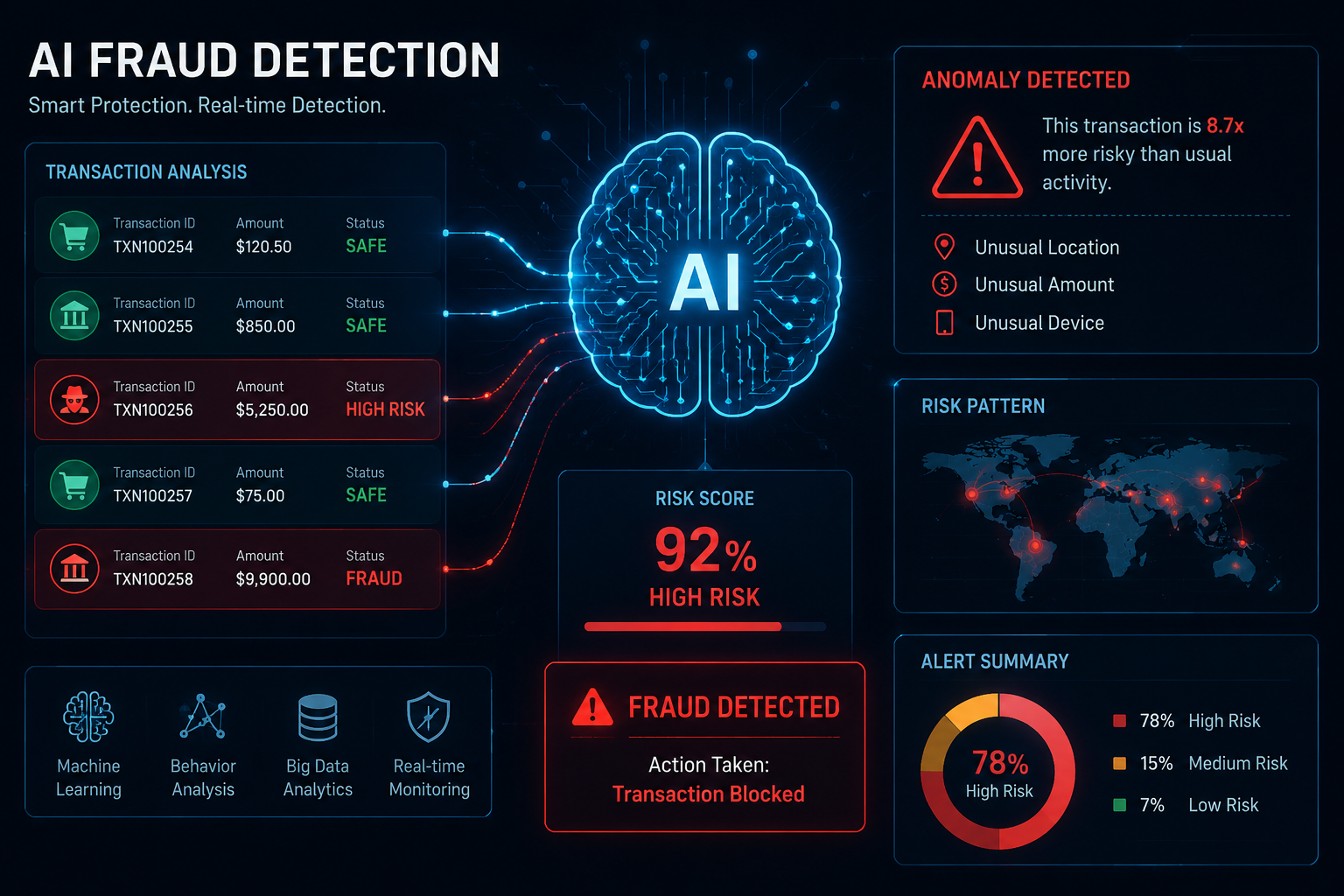
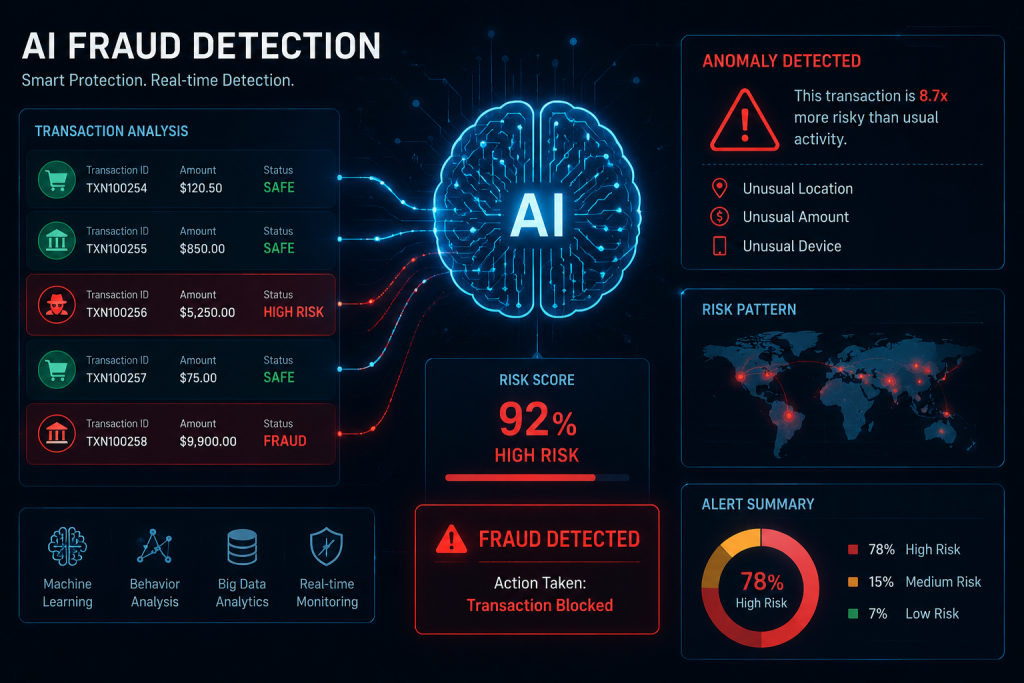
AI-first fraud detection uses machine learning and advanced analytics to detect and prevent fraudulent activity in real time, revolutionizing the way organizations manage financial crime. It enhances traditional systems by continuously learning and adapting to new fraud patterns, delivering both speed and accuracy that static rule-based tools simply cannot match.
What is AI-First Fraud Detection?
AI fraud detection relies on machine learning algorithms that analyze massive datasets—including transaction history, user behavior, and device data—to build an understanding of “normal” activity. As the system learns, it can spot unusual behaviors, such as sudden large international transfers or logins from new locations, and raise immediate alerts.
How AI-First Fraud Detection Works
- Data Collection: AI gathers data on user activity, transactions, locations, and device signatures to establish behavioral baselines.
- Anomaly Detection: The system looks for patterns that don’t match the user’s history, flagging out-of-pattern events for review.
- Continuous Learning: Each flagged or verified event helps the system evolve and adapt, improving efficiency over time.
- Real-Time Alerting: Suspicious transactions can be blocked or escalated to analysts instantly for intervention.
- Risk Scoring: Transactions are scored based on risk factors—like speed, location, and user history—allowing automated triage.
Benefits of AI-First Fraud Detection
- Instant Response: Fraud attempts can be detected and stopped in milliseconds, minimizing losses.
- Scalability: AI systems easily expand to handle growing transaction volumes without requiring significant manual resources.
- Reduced False Positives: Dynamic algorithms continuously refine detection rules, leading to fewer incidents of legitimate transactions being incorrectly flagged.
- Cost Savings: Automating fraud detection reduces the need for large review teams, freeing resources.
- Customer Trust: Real-time protection with low friction keeps end-users secure without impacting their experience.
Key Use Cases
- Credit Card Fraud: Monitoring for unusual spending habits or geographical anomalies.
- Identity Theft & Account Takeover: Flagging suspicious logins and access attempts from new devices or locations.
- Money Laundering: Tracking complex and cross-border transfer patterns.
- Synthetic Identity Fraud: Identifying mismatched behavioral patterns that may indicate blended real and fake credentials.
Real-World Impact
Major financial institutions report significantly reduced fraud rates and false positives since deploying AI-first systems, along with improved compliance and operational efficiency. Banks, payment processors, and telecoms are among the most active adopters, but these methods are rapidly spreading to e-commerce and emerging fintech.
Challenges and Considerations
- Data Security: Protecting sensitive information used by AI models is critical.
- Mitigating Bias: Robust training and diverse datasets are required to avoid unintentional discrimination.
- Transparency (“Black Box” Risk): Deep-learning models can be hard to interpret, posing challenges for compliance and customer communication.
AI-First Fraud Detection Lifecycle Visual
Below is a simple flow diagram to visualize the AI-first fraud detection process:
1. Data Collection →
2. Behavioral Analysis →
3. Anomaly & Risk Scoring →
4. Real-Time Flag/Block →
5. Continuous Learning/Feedback
Looking Ahead
AI-first fraud detection will continue to evolve as fraud tactics adapt, but the field’s focus on real-time analysis, scale, and adaptability ensures it will remain a central pillar of digital risk management for years to come.